

UI Design | Mobile App | Product Design | Phygital ExperienceANI: Building healthier habits, one step at a time.
An intelligent nutritional assistant exploring how technology, personalisation and connected devices can make healthier eating habits easier to build and maintain.
01 | Project overview
A different approach to healthy eating.
ANI was a collaborative Master’s project exploring how technology could help young adults develop healthier and more sustainable eating habits.
Rather than focusing on restrictive diets or drastic lifestyle changes, the idea behind ANI was to make small, gradual improvements that could become part of everyday life. We developed the concept of an intelligent nutritional assistant that combines a mobile app with connected physical devices, creating an ecosystem designed to support users throughout their daily routines.
The app uses the concept of habit formation, drawing inspiration from James Clear's book Atomic Habits, alongside the potential of AI and machine learning to offer more personalised guidance based on users' nutritional information and routines.
02 | The challenge
Making healthy habits easier to maintain.
For many young adults, eating healthily can feel like a constant cycle of restrictive diets, short-term goals and frustration. Even when people understand the importance of good nutrition, turning that knowledge into lasting everyday habits can be difficult.
Our research explored the relationship younger generations have with food, nutrition and healthy lifestyles. We were particularly interested in how the idea of eating healthily was often associated with sacrifice and strict rules, rather than something that could be approached gradually and enjoyed.
This led us to explore a different question:
How might we use technology and habit-forming methods to help young adults make healthier nutritional choices in a more natural and sustainable way?
03 | The concept
More than a nutrition app.
We envisioned ANI as a phygital service, combining a digital experience with connected physical devices to create a more complete nutritional assistant.
At its core, the service is built around the idea that lasting change comes from small actions repeated over time, rather than dramatic transformations. Inspired by the principles of Atomic Habits, ANI aims to help users recognise their existing routines, identify opportunities for improvement and gradually build healthier habits.
The concept also explores a freemium model, offering a mobile app alongside additional connected devices through a subscription. Together, these elements form an ecosystem designed to support users without making nutrition feel like another task they constantly have to think about.
04 | The mobile experience
Your personal nutritional assistant.
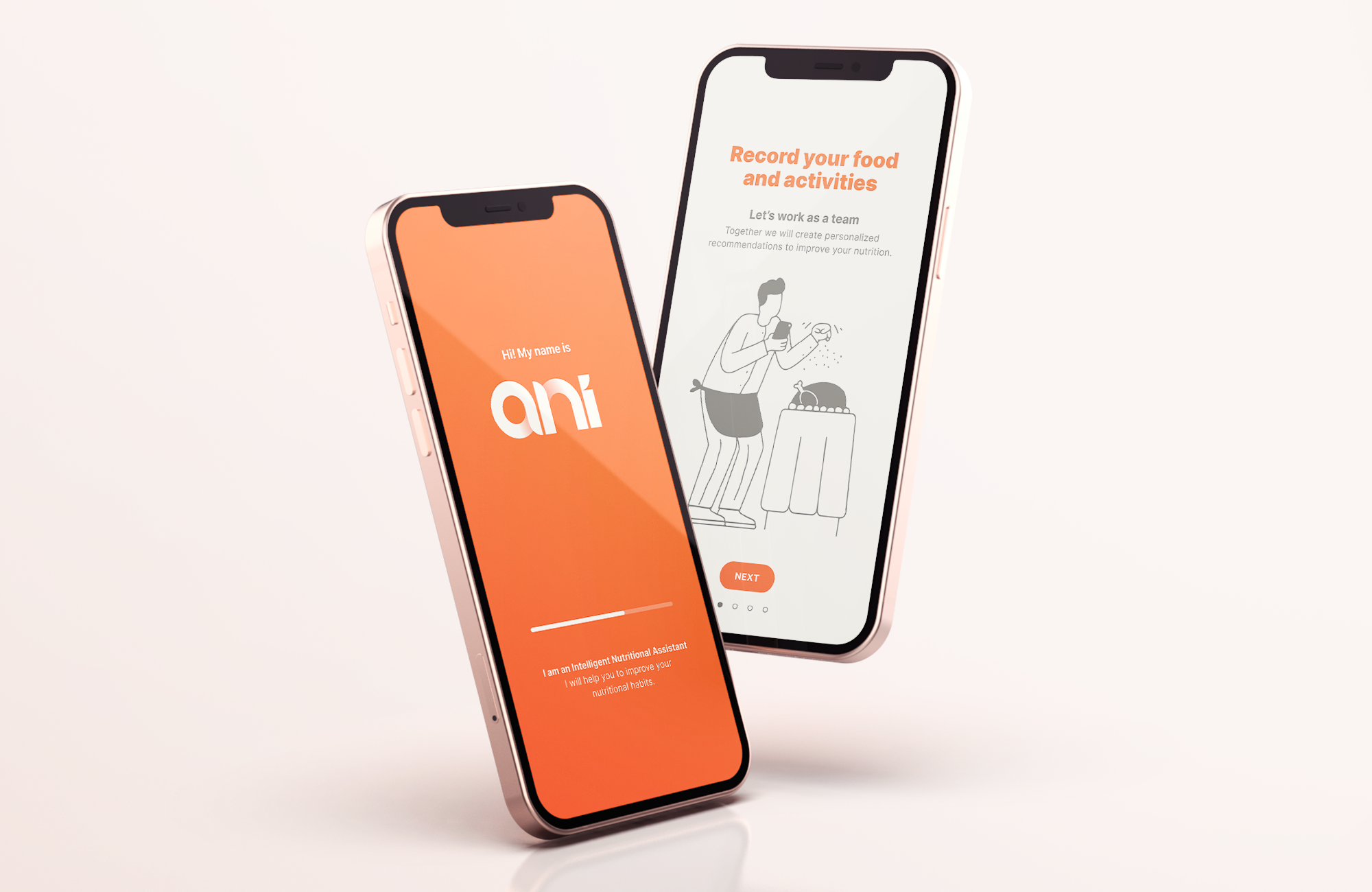
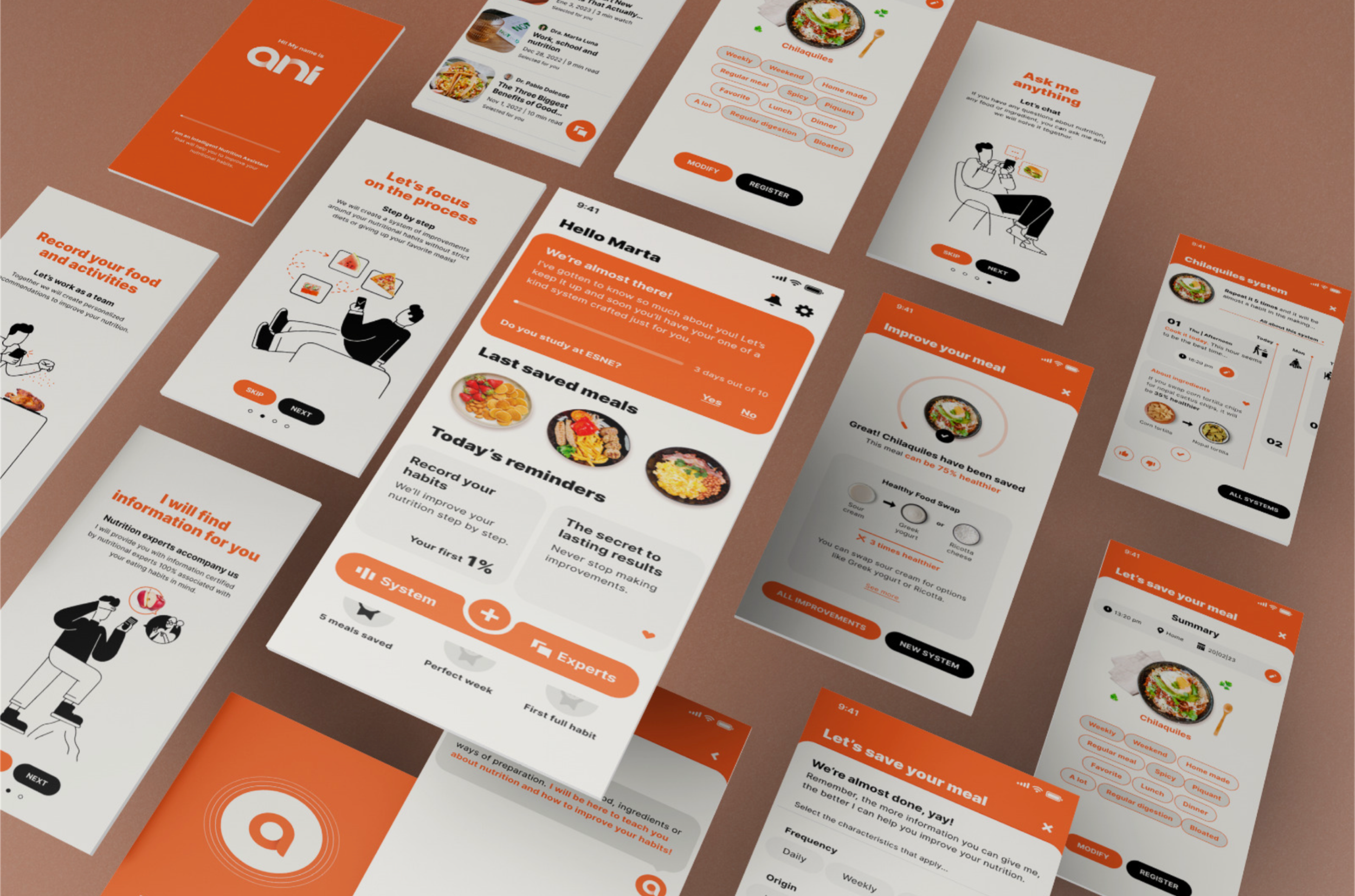
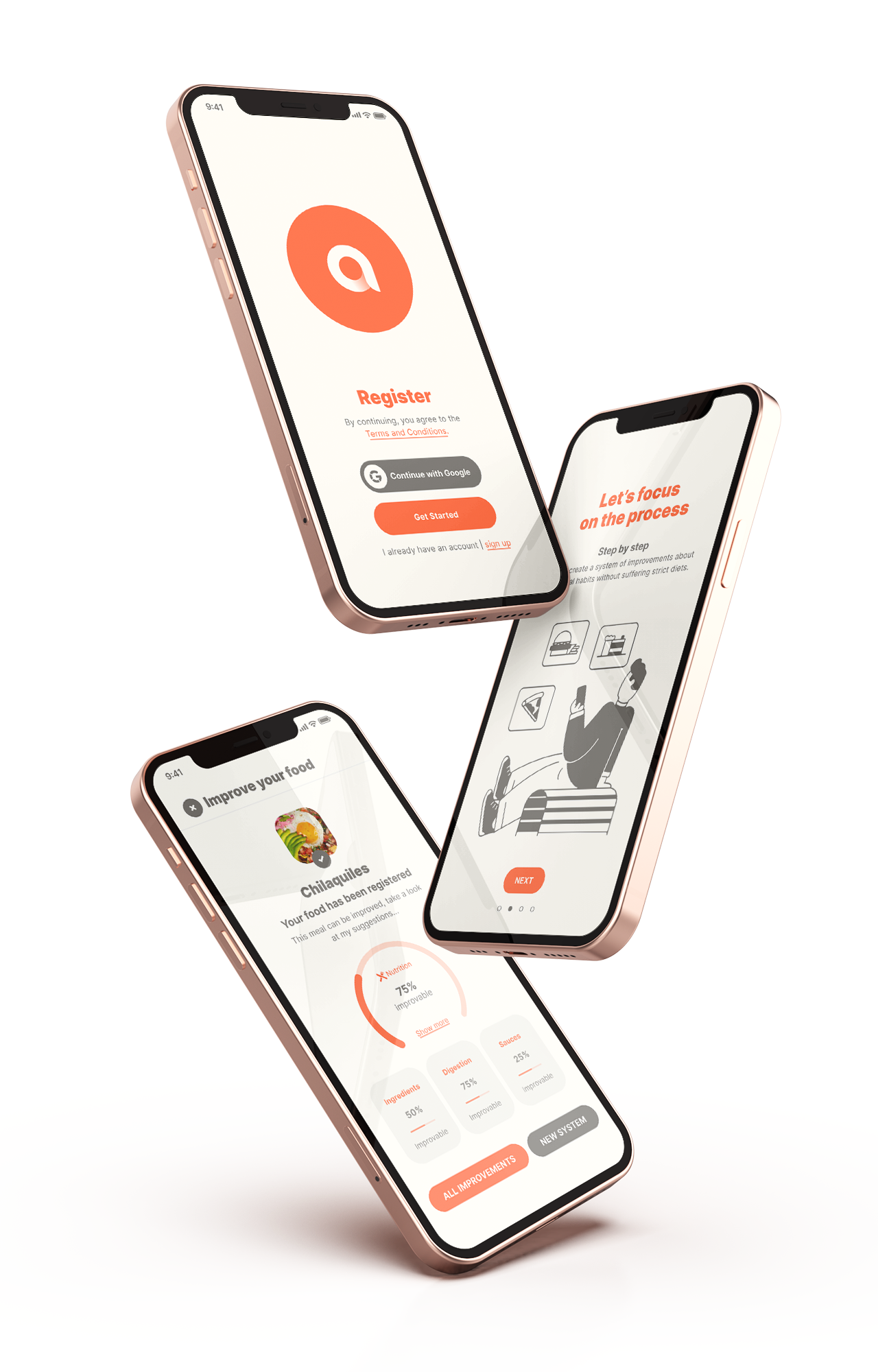
The mobile app was designed to help users understand their eating habits and make gradual improvements through personalised guidance.
The interface brings together nutritional information, habit tracking and practical recommendations in one place. Rather than overwhelming users with strict targets or complicated data, the experience focuses on showing where improvements can be made and breaking them down into manageable steps.
I contributed to the final interface designs, developing the visual language, layouts and individual screens to create a consistent experience throughout the app.
05 | The connected experience
Bringing ANI into the kitchen.
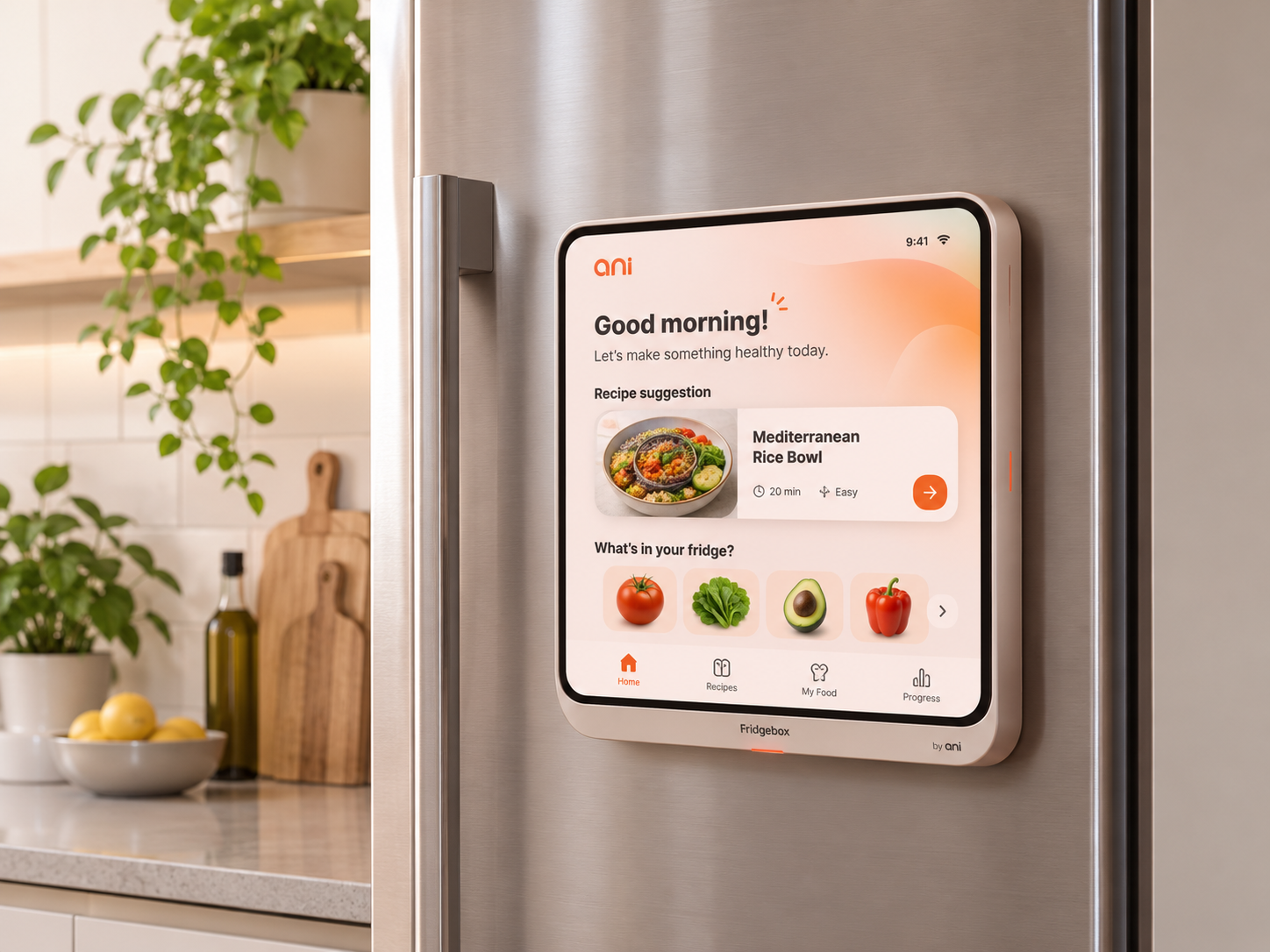
One of the physical elements we designed for the ANI ecosystem was a connected tablet intended to sit on the fridge.
The idea was to make nutritional assistance part of the everyday kitchen routine, rather than something users only interact with through their phones. Connected to the ANI app, the tablet would provide recipe inspiration and suggestions based on the ingredients available in the fridge, helping users make better use of the food they already have.
We wanted this part of the experience to feel practical and accessible, offering useful information at the moment users actually need it, whether they're deciding what to cook or looking for inspiration for their next meal.
06 | Outcome & future development
A connected approach to everyday nutrition.
The project resulted in a proposed nutritional assistant ecosystem, combining the mobile app concept with connected physical devices. The final presentation brought together the service concept, habit-forming methodology, app interface and ideas for future development.
One of the key ideas was to make healthy eating feel less restrictive by focusing on achievable improvements and consistency over time. The connected tablet also explored how nutritional guidance could become part of everyday routines, extending the experience beyond the phone.
ANI was developed as a university concept rather than a commercially launched product. Its AI, machine learning and connected-device functionality were part of the proposed service and were not developed as fully functioning technical features.
07 | Reflection
Thinking beyond the screen.
ANI gave me the opportunity to explore a different side of digital product design, looking at how a mobile application could become part of a wider service and physical environment.
I particularly enjoyed working on the connected tablet concept, as it challenged me to think about how people interact with technology in everyday situations and how a digital experience can extend beyond the screen.
The project also gave me experience collaborating on a shared concept while taking ownership of specific design deliverables. It reinforced my interest in combining visual design with practical thinking and in creating experiences that feel useful in people's everyday lives.